Bible Poverty Explained: 3 Facts About Bible Poverty You Didn’t Know
Summary
When people hear the word “poverty,” they often think of food, water, or shelter. Rarely do they think about access to Scripture. Yet Bible poverty is a real and ongoing issue affecting millions of people worldwide, a reality first mapped in Mapping the Multilingual Mosaic of East Asia. Bible poverty describes the condition of individuals and communities who do not have access to God’s Word in a language they can truly understand.
In 2026, Bible poverty remains one of the least understood challenges in global Christianity, as outlined in All Access Goals: Scripture Without Borders. Here are three facts about Bible poverty that may surprise you.
Fact 1: Bible Poverty Is About Language, Not Belief

Many People Want Scripture—but Don’t Have It
Bible poverty does not mean people are uninterested in the Bible. In many cases, communities actively desire Scripture but cannot access it in their heart language, a tension echoed in Voices in the Void: Seeking Spiritual Soundbites in Asia. While a national or trade language Bible may exist, it often feels distant, difficult, or incomplete for everyday faith.
Language is how people express emotion, pray, and understand complex ideas. Without Scripture in a heart language, biblical teaching can feel abstract and inaccessible. This is why Bible poverty is deeply tied to language barriers rather than spiritual indifference.
Heart Language Changes Everything
When Scripture is translated into a community’s mother tongue, understanding deepens. People no longer rely on summaries or secondhand explanations. They encounter the Word of His grace directly—clearly and personally, as seen in testimonies like I Want Jesus to Save Me from My Lostness.
Fact 2: Bible Poverty Still Affects Millions in 2026
Progress Has Been Made, But the Gap Remains
Significant progress has been achieved in Bible translation over the past century. Thousands of languages now have at least some Scripture. Yet Bible poverty persists because linguistic diversity is vast, especially in regions like Asia.
Thousands of languages still lack a full Bible, and many have no Scripture at all—not even a single verse. This means millions of people remain unable to read or hear God’s Word in a way that resonates with their daily lives, a reality highlighted during Pentecost 2025: When Heaven Meets Earth in Asia.
Bible Poverty Is Often Invisible
In an age of Bible apps and digital access, Bible poverty can feel invisible to those who already have Scripture. But availability in one language does not equal access in all languages. Bible poverty exists quietly, often unnoticed, in remote villages, minority communities, and oral cultures—many of which are served through How Bible Translation Works.
Fact 3: Bible Poverty Limits Spiritual Growth and Community Life
Scripture Shapes Faith and Identity
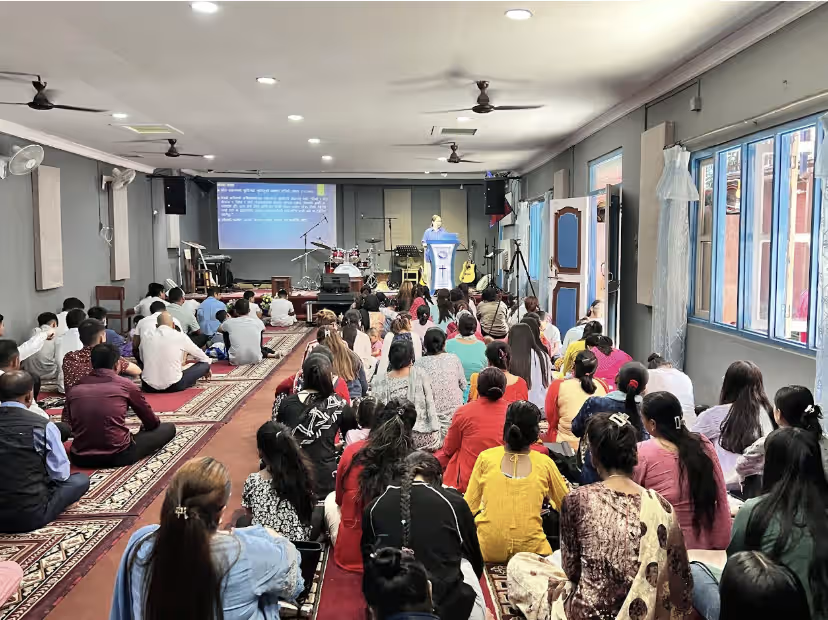
The absence of Scripture in a heart language affects more than personal devotion. It impacts teaching, discipleship, worship, and leadership development. Churches may rely heavily on outside resources, limiting local ownership of faith.
When the Bible becomes accessible, communities often experience spiritual renewal. Scripture speaks into everyday life, cultural questions, and shared values. This encounter frequently leads to Gratitude, Wonder, and Worship as people recognize that God speaks their language.
Translation Creates Long-Term Impact
Addressing Bible poverty is not a short-term fix. Translation enables generations to grow up hearing and understanding Scripture. It strengthens churches, supports education, and affirms cultural identity—without replacing it, a long-term vision reflected in 25 Old Testament Stories.
Why Bible Poverty Matters to the Global Church
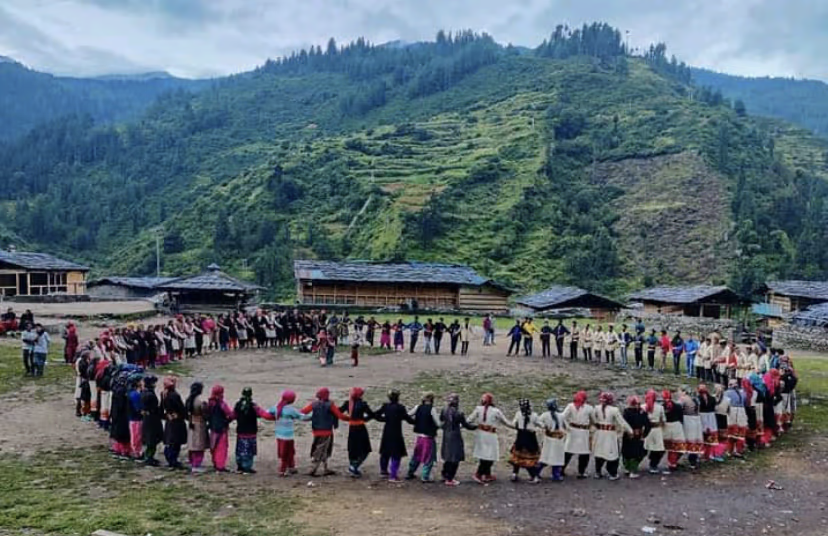
Bible poverty challenges the assumption that the mission is complete. It reminds the global Church that access to Scripture is not evenly distributed. Faith cannot flourish fully where God’s Word remains linguistically out of reach.
Addressing Bible poverty is about justice, dignity, and spiritual inclusion. It ensures that no community is left to experience faith only through borrowed words, a conviction central to illumiNations Asia’s mission and affirmed by global research from the United Bible Societies.
What Can Be Done About Bible Poverty?
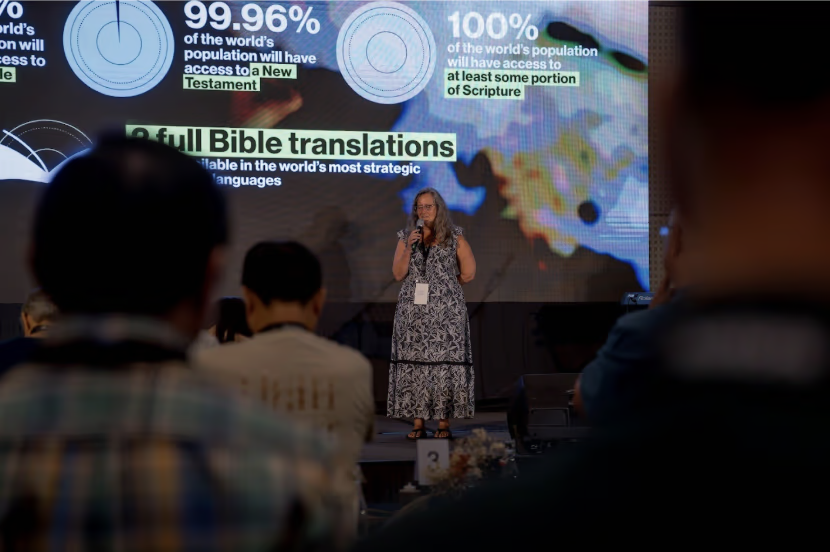
Bible translation is the most effective response to Bible poverty. Through collaboration between linguists, local translators, scholars, and supporters, Scripture can be made available in languages that have waited generations.
Prayer, advocacy, and support all play a role in helping reduce Bible poverty worldwide, as encouraged through Pray for Zero.
Learning

Bible poverty is not about the absence of faith—it is about the absence of access. The three facts are clear: Bible poverty is rooted in language, it still affects millions in 2026, and it limits spiritual growth where Scripture is unavailable. By understanding Bible poverty, the global Church can respond with compassion and commitment, helping bring the Word of His grace to every language—and inviting communities everywhere into gratitude, wonder, and worship.
Share:
More Posts