Bible Translation Stats 2026: Debunking Myths About Unreached People Groups
Summary
One of the most common assumptions about Christianity today is this: Isn’t the Bible already translated? With hundreds of Bible versions available online and in bookstores, it can feel like Bible translation is a finished task. However, the Bible translation stats 2026 tell a very different story—especially when it comes to unreached people groups, a reality first explored in Mapping the Multilingual Mosaic of East Asia.
This article debunks common myths and explains why Bible translation remains urgently needed in 2026.
Myth 1: The Bible Has Been Translated Into Every Language
The Reality Behind the Numbers
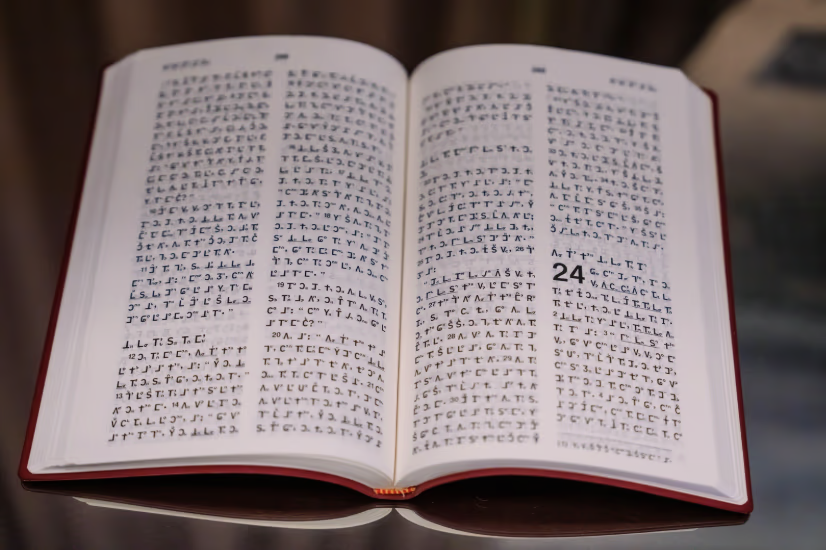
While the Bible has been translated into many languages, it is far from being available to everyone. According to current Bible translation stats, thousands of languages worldwide still lack access to Scripture—some without even a single verse, as highlighted in All Access Goals: Scripture Without Borders.
Many of these languages are spoken by smaller, often marginalized communities. For these groups, the Bible is not accessible in a language that feels natural or deeply understandable.
Translation progress is significant—but incomplete.
Myth 2: If People Speak a National Language, They Don’t Need Translation

Heart Language Matters
Another common misconception is that people can simply read the Bible in a national or trade language. While many can communicate in second languages, faith is rarely formed at the deepest level through a borrowed tongue, a tension echoed in Voices in the Void: Seeking Spiritual Soundbites in Asia.
People connect most fully with Scripture when it is available in their heart language—the language of emotion, prayer, and identity. Without this, understanding God’s message often remains distant and abstract.
This is why unreached people groups are defined not only by geography or religion, but by language.
Myth 3: Bible Translation Is Nearly Finished
Bible Translation Stats 2026 Tell a Different Story
As of 2026, global data shows that:
- Thousands of languages still have no full Bible
- Hundreds of languages have no Scripture at all
- Millions of people remain part of unreached people groups due to language barriers
In Asia alone, over a thousand languages still lack Scripture in their heart language, a reality revisited during Pentecost 2025: When Heaven Meets Earth in Asia. These statistics highlight that Bible translation is not a historical achievement—it is an ongoing mission.
Myth 4: Bible Translation Is Just About Words
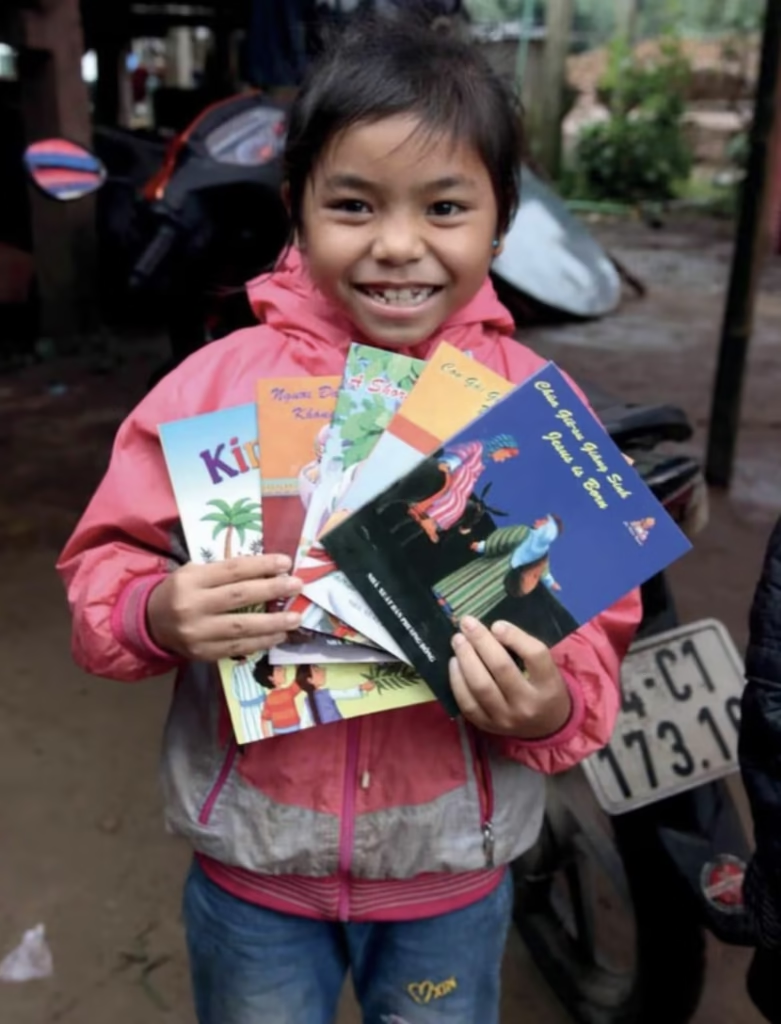
Translation Is About Understanding and Transformation
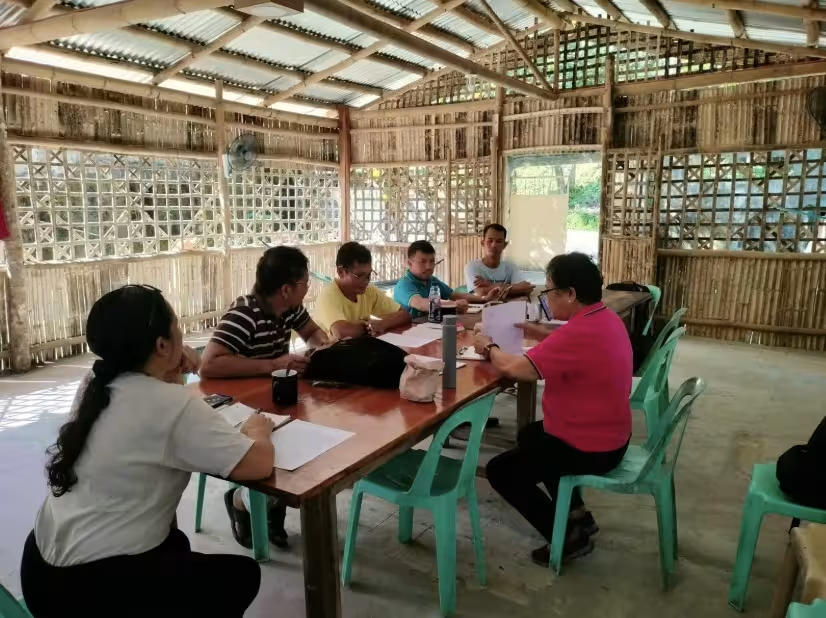
Bible translation is not a mechanical word-for-word task. It is a careful process of communicating meaning, theology, and story across cultures. Translators work to ensure accuracy while making Scripture sound natural and understandable, a process detailed in How Bible Translation Works.
When communities finally hear Scripture in their own language, the response is often profound. People experience Gratitude, Wonder, and Worship as they realize that God speaks their language and understands their culture.
This is where translation becomes transformation.
Myth 5: Progress Means the Mission Is No Longer Urgent
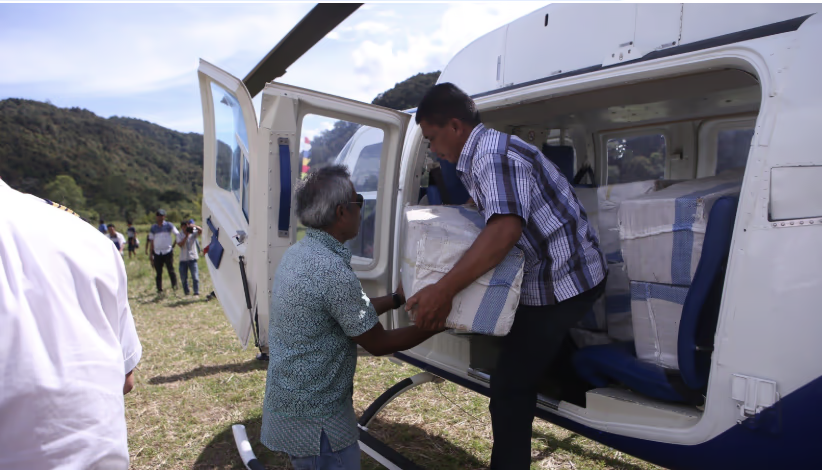
Progress Reveals Responsibility
Yes, Bible translation progress has accelerated in recent decades. Technology, collaboration, and global partnerships have made it possible to start translation work in more languages than ever before.
But progress does not eliminate urgency—it clarifies responsibility. Every remaining language represents a people group still waiting to encounter the Word of His grace in a way that feels personal and clear, as seen in testimonies like I Want Jesus to Save Me from My Lostness.
Until every language has access to Scripture, the mission remains unfinished.
Why Unreached People Groups Still Matter in 2026
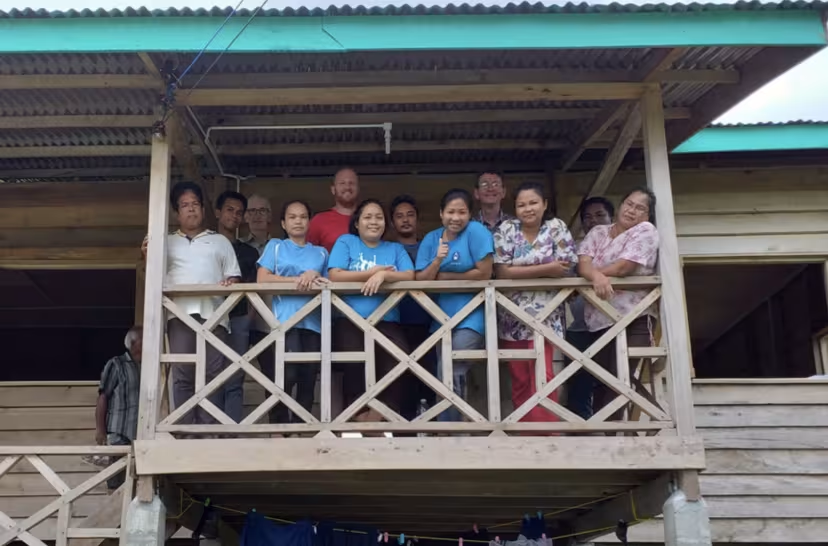
Unreached people groups are not simply statistics. They are communities with histories, cultures, and spiritual questions—many of whom have never had the opportunity to hear the Bible in their own language.
Bible translation addresses this gap by honoring language, culture, and dignity. It ensures that faith is not imported, but understood, a conviction at the heart of illumiNations Asia’s mission and reflected in ongoing global research by the United Bible Societies.
Learning

So, is the Bible already translated? The Bible translation stats 2026 make the answer clear: no, not yet. Despite remarkable progress, thousands of languages and unreached people groups still lack access to Scripture in their heart language. Debunking these myths helps the global Church see the mission clearly—and respond faithfully. As long as people remain without access to God’s Word, Bible translation continues to invite the world into gratitude, wonder, and worship through the living Word of His grace.
Share:
More Posts