Bibleless People Groups in Asia: How Many Languages Still Lack a Single Bible Verse?
Summary
Asia is home to some of the world’s oldest civilizations, richest cultures, and greatest linguistic diversity. Yet it is also the region with the largest concentration of bibleless people groups—communities that do not have even a single verse of the Bible in their heart language, a reality first mapped in Mapping the Multilingual Mosaic of East Asia. Understanding how many languages remain without Scripture helps reveal why Bible translation continues to be one of the most urgent missions in 2026.
The Big Picture: Bibleless Languages Across Asia
1,103 Asian Languages Still Waiting
Today, 1,103 languages in Asia still have little or no access to Scripture. For the people who speak these languages, the Bible is not something they can read, hear, or understand in a way that feels personal, a challenge echoed in All Access Goals: Scripture Without Borders. This means millions of people across the continent have never encountered God’s Word in the language they think, pray, and dream in.
While global Bible translation progress has been significant, Asia remains a central focus because of its sheer linguistic diversity and population size, a concern revisited throughout Pentecost 2025: When Heaven Meets Earth in Asia.
Regional Breakdown of Bibleless People Groups
Southeast Asia: 471 Languages Without Scripture
Southeast Asia has the largest number of bibleless languages in the region, with 471 languages still lacking Scripture. Many of these languages are spoken in island regions and remote areas, where geography and limited resources make translation especially challenging, as illustrated in Voices in the Void: Seeking Spiritual Soundbites in Asia.
These communities often rely on oral communication, making audio Scripture and storytelling essential parts of translation work.
South Asia: 280 Languages Still Waiting
South Asia is home to 280 languages with little or no access to the Bible. Although some countries in this region have long Christian histories, vast numbers of language communities still do not have Scripture in their mother tongue.
Without translation, faith is often experienced through second-hand teaching rather than direct engagement with God’s Word, a challenge reflected in stories like 25 Old Testament Stories.
East Asia: 205 Languages With Limited or No Scripture
In East Asia, 205 languages remain without Scripture. Political restrictions, complex writing systems, and cultural barriers contribute to the slow pace of translation in some areas. Yet the need remains profound, as language plays a crucial role in spiritual understanding and identity, a theme explored in Daniel’s Defiance: Into the Fire of Persecution.
Indo-China: 147 Languages Without a Bible Verse
The Indo-China region includes 147 languages still waiting for Scripture. Many of these are spoken by minority communities whose languages are not widely recognized or documented, making translation work both delicate and essential, as seen in Ezra’s Blueprint: Rebuilding Lives One Verse at a Time.
Why Bibleless People Groups Still Exist
Language Is the Final Barrier
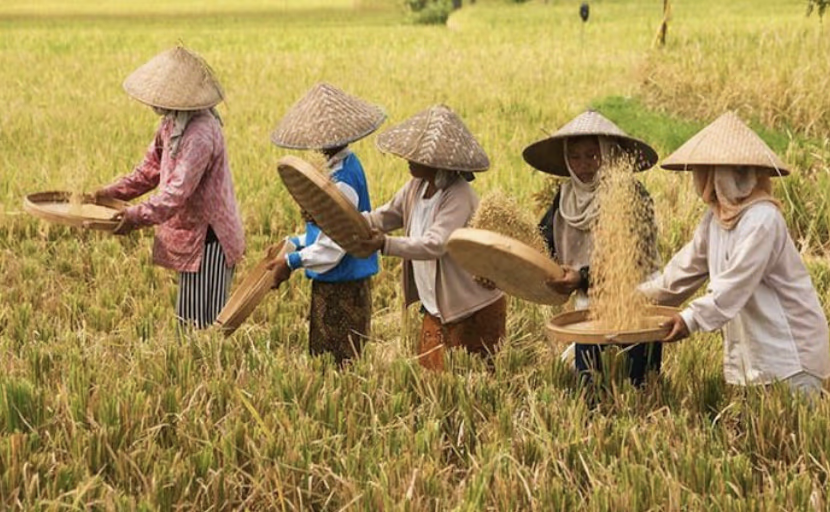
Most remaining Bibleless people groups are not unreached because of lack of interest, but because of language. Many communities may speak national languages for trade or education, yet still connect most deeply through their heart language.
Scripture in a second language rarely carries the same emotional or spiritual weight as Scripture in one’s mother tongue.
Progress Has Been Made—But the Work Is Not Finished
Across Asia, Bible translation progress has reached approximately 40% completion. This shows meaningful advancement, but also highlights how much work still remains. Thousands of communities are still waiting to hear even a single verse of Scripture in their own language, a gap that global research bodies such as the United Bible Societies continue to track.
Why Scripture in the Heart Language Matters
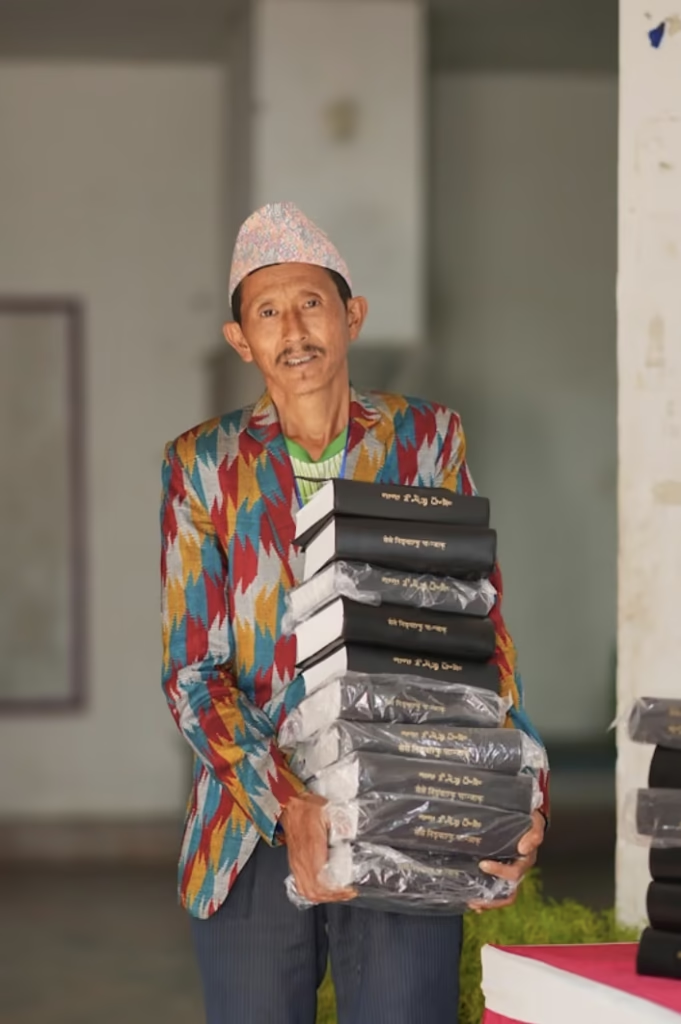
When people encounter the Bible in their heart language, the impact goes far beyond understanding words. Scripture becomes relational and transformative. Communities often respond with Gratitude, Wonder, and Worship as they realize God speaks their language and values their culture, a truth repeatedly affirmed through the mission of illumiNations Asia.
This is how people encounter the Word of His grace not as an abstract idea, but as a personal message that speaks directly to their lives.
What Can Be Done to Reach Bibleless Languages
A Shared Responsibility
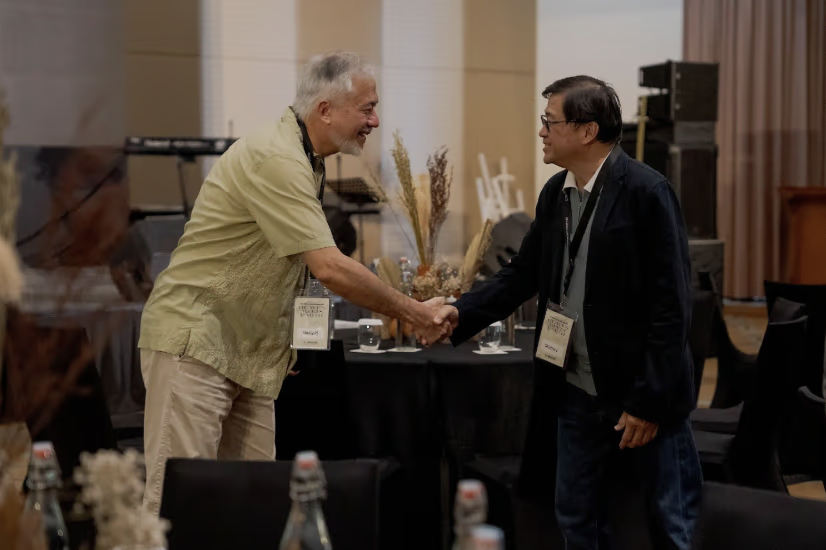
Addressing the needs of bibleless people groups requires collaboration—prayer, funding, linguistic expertise, and long-term commitment. Translation is not a quick task, but it is a lasting one.
Supporting Bible translation helps ensure that no language is overlooked and no community is forgotten, a call echoed in Join the Movement: Becoming a Gospel Patron.
Learning
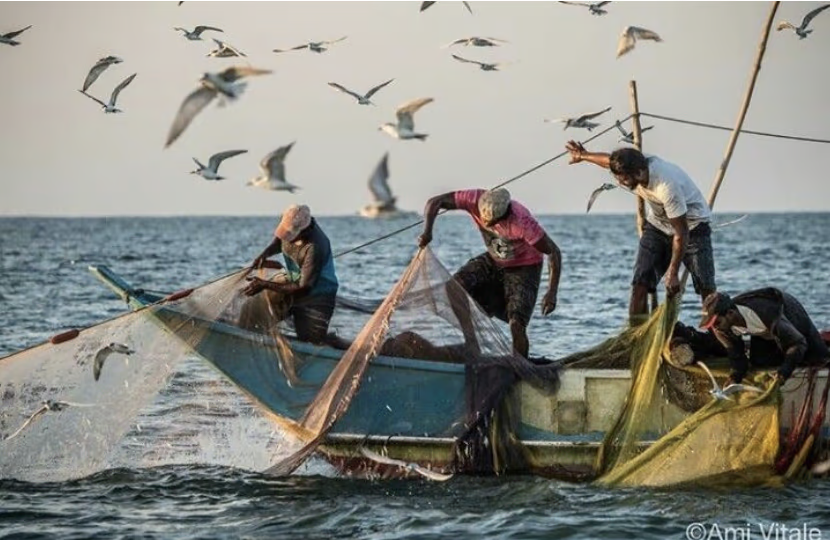
Addressing the needs of bibleless people groups requires collaboration—prayer, funding, linguistic expertise, and long-term commitment. Translation is not a quick task, but it is a lasting one.
Supporting Bible translation helps ensure that no language is overlooked and no community is forgotten, a call echoed in Join the Movement: Becoming a Gospel Patron.
Share:
More Posts