Mission Goals 2026: Is the Great Commission Possible in Our Lifetime?

Summary
Jesus’ command to “go and make disciples of all nations” has shaped Christian mission for over two thousand years. Yet for many believers today, the question feels more urgent than ever: Is the Great Commission possible in our lifetime? As we evaluate mission goals 2026, the answer depends not on optimism alone, but on progress, priorities, and perseverance—especially in Bible translation, as seen across impact stories from language communities.
What Does the Great Commission Require?
More Than Global Presence
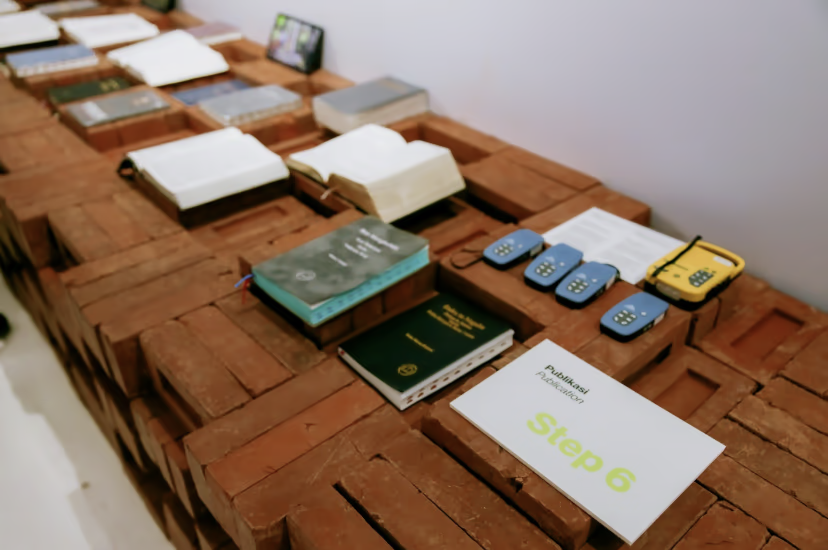
The Great Commission is not simply about geographical reach. It is about understanding—ensuring people can hear, read, and respond to God’s Word in a language that speaks to their heart. Without Scripture in a heart language, discipleship remains limited, and faith is often dependent on intermediaries.
This is why Bible translation sits at the center of global mission efforts, reflecting the long-term vision of Illuminations Asia’s mission across Asia.
Language as the Final Frontier
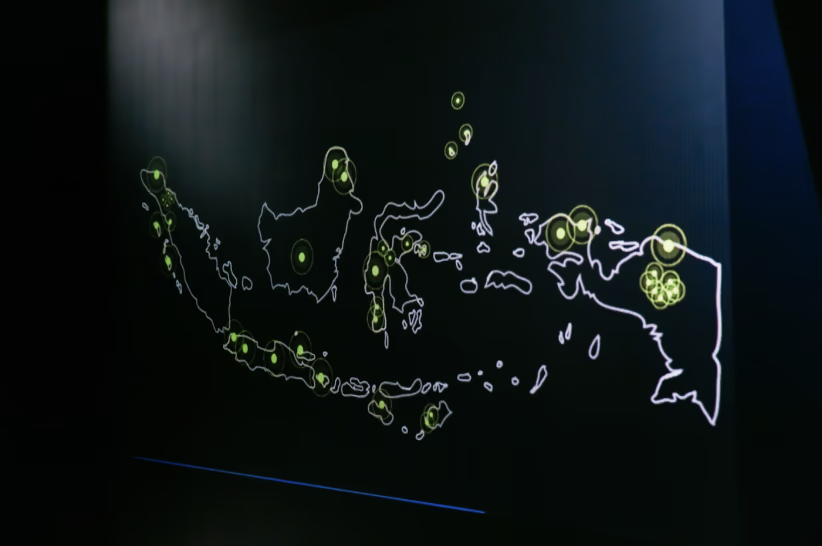
Most remaining unreached people groups are unreached not by geography, but by language. Thousands of communities still lack access to Scripture in a language they understand deeply. Addressing this gap is essential to fulfilling the Great Commission, as demonstrated in how the Word of the Lord came to previously unreached languages.
Measuring Progress Toward Mission Goals 2026
Real Advances, Real Challenges
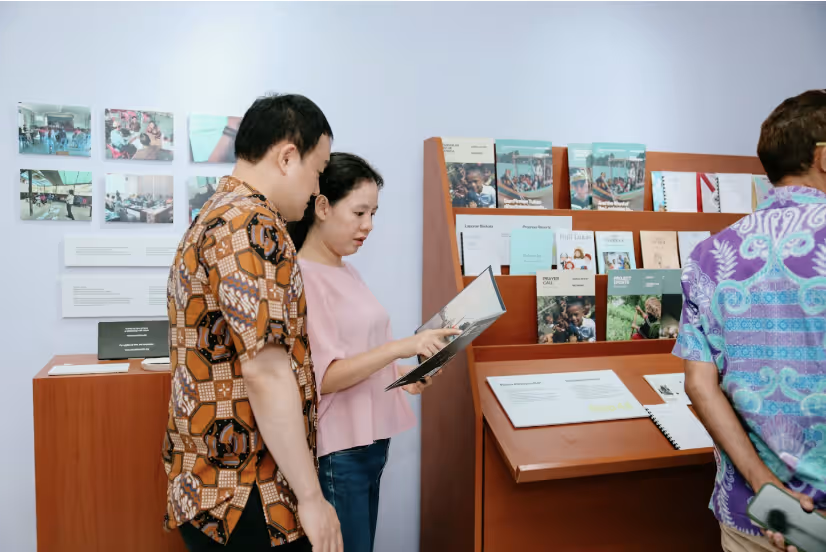
Over the past decades, Bible translation has accelerated dramatically. Collaboration, technology, and global partnerships have made it possible to start translation work in more languages than ever before.
Mission goals 2026 reflect this momentum: increased Scripture access, more translation projects underway, and growing awareness of remaining needs. Yet progress is uneven. Some regions move quickly, while others face linguistic, political, or educational barriers, as reflected in continuing to sow in different ways across mission contexts.
Access Versus Understanding
Having Scripture available does not automatically mean it is understood. Literacy, Scripture engagement, and local teaching are critical. Translation must be paired with education and community involvement for the Great Commission to take root, as seen in structured discipleship journeys such as Week 1 teachings.
Why Bible Translation Makes the Great Commission Achievable
From Hearing to Understanding the Word of His Grace
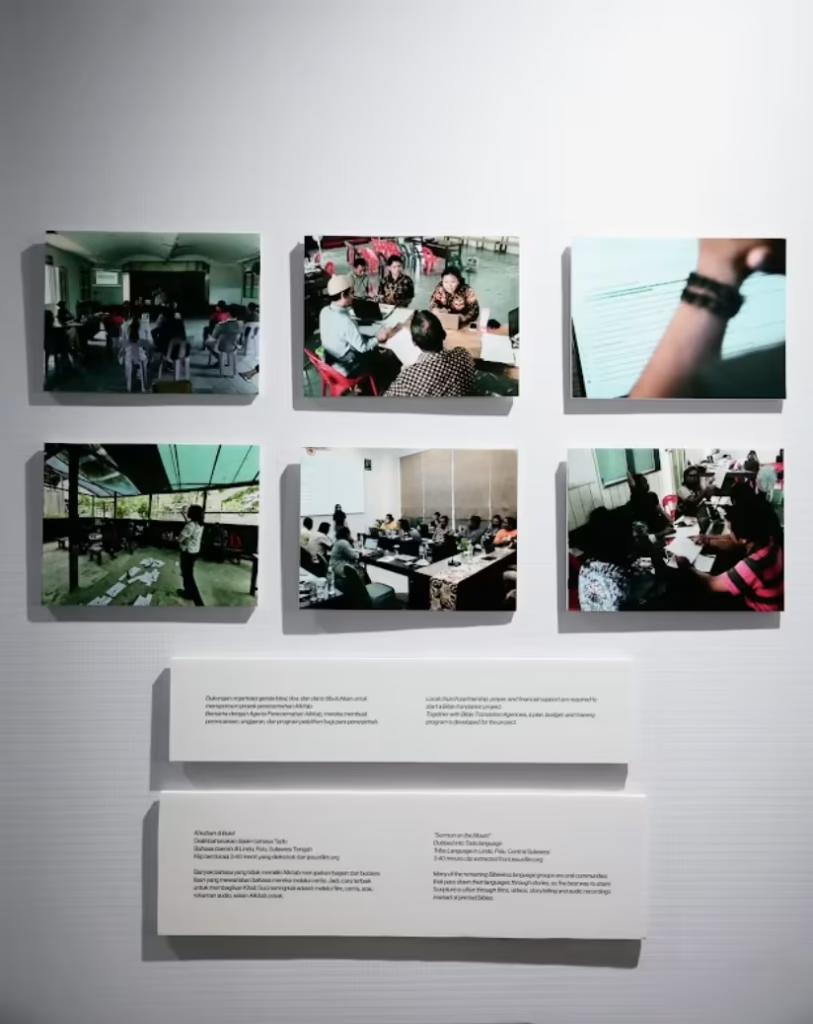
When people encounter the Word of His grace in their heart language, faith becomes personal and transformative. Scripture moves from something heard about to something known.
This shift enables discipleship that is sustainable and self-propagating—key to completing the Great Commission within a generation.
Local Churches Multiply the Mission
Bible translation empowers local believers to teach, disciple, and lead within their own cultural context. Instead of relying on outside voices, churches grow from within, as reflected in testimonies like I want Jesus to save me from my lostness.
This multiplication effect is essential for reaching all nations.
What Still Needs to Happen
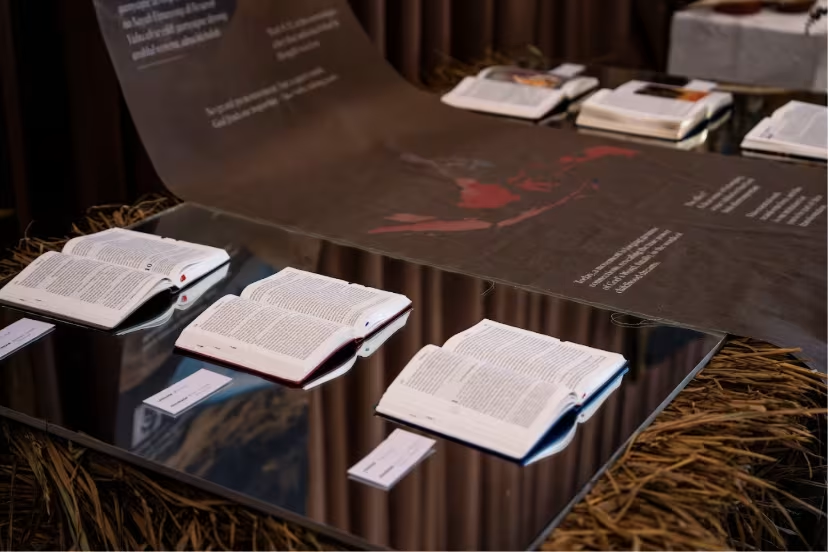
Completing the Remaining Translation Work
Mission goals 2026 highlight the need to:
- Begin translation in remaining languages without Scripture
- Complete ongoing translation projects faithfully and accurately
- Expand literacy and Scripture engagement where access already exists
These steps are achievable—but only with sustained commitment, as illustrated in long-held dreams fulfilled through Scripture access.
Aligning Vision With Action
The Great Commission will not be fulfilled by intention alone. It requires coordinated effort: prayer, funding, skilled translators, and long-term partnership with local communities.
Every remaining language represents both a challenge and an opportunity.
Signs of Hope in 2026

Communities Respond With Gratitude, Wonder, and Worship
When Scripture reaches a people group for the first time, the response is often deeply emotional. Communities express Gratitude, Wonder, and Worship as they realize God speaks their language and values their culture—echoing patterns seen throughout Illuminations Asia’s impact story archive.
These moments are not symbolic—they are evidence of the Great Commission unfolding in real time.
The Timeline Is Shorter Than Ever
For the first time in history, it is realistic to envision Scripture access for every people group within a single generation. Mission goals 2026 are not about speculation; they are grounded in measurable progress and global collaboration, supported by global insights from UNESCO’s literacy and education research.
Is the Great Commission Possible in Our Lifetime?
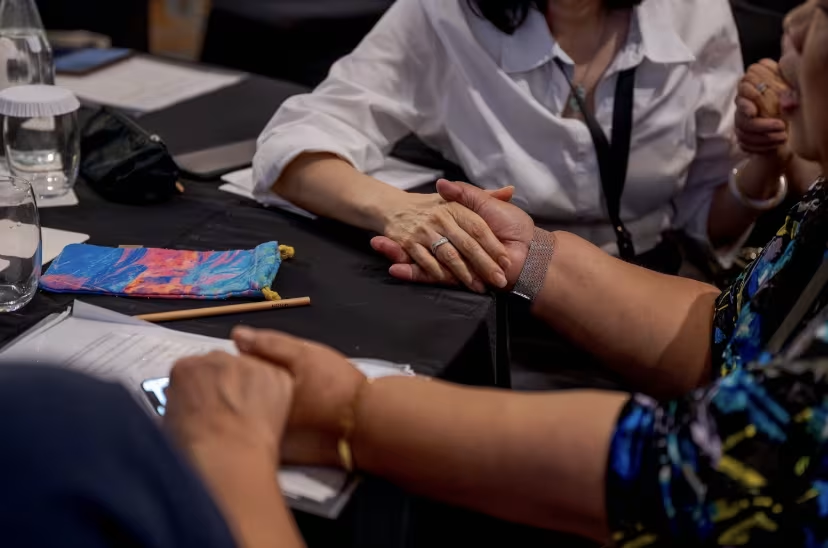
The question is no longer if it is possible, but whether the global Church will remain faithful to the task. With Bible translation addressing the final language barriers, the Great Commission is closer to completion than ever before.
What remains is resolve.
Learning

So, is the Great Commission possible in our lifetime? As we assess mission goals 2026, the answer is increasingly hopeful. Through focused Bible translation, literacy, and discipleship, the global Church is moving from aspiration to fulfillment. When people encounter the Word of His grace in a language they understand, faith takes root—and the response echoes across cultures in gratitude, wonder, and worship. The Great Commission is not a distant dream; it is a mission unfolding now.
Share:
More Posts