Ethics of Mission: Is It Ethical to Translate Bibles for Remote Tribes?


Summary
In conversations about missions today, one question surfaces again and again: Is it ethical to translate the Bible for remote tribes? Critics often raise concerns about cultural intrusion, coercion, or the imposition of foreign beliefs. These are serious questions—and they deserve thoughtful, honest answers.
Exploring the ethics of mission helps clarify whether Bible translation is an ethical act of service or an inappropriate interference in indigenous cultures, especially in regions highlighted by Mapping the Multilingual Mosaic of East Asia.
Why This Question Exists

Historical Abuses Cannot Be Ignored
Concerns about mission ethics are rooted in real historical injustices. In the past, some mission efforts were intertwined with colonial power, cultural suppression, or forced conversion. These realities have shaped modern skepticism.
Acknowledging this history is essential. Ethical Bible translation today exists precisely because the mission world has learned from these mistakes and committed to doing better, as reflected in movements like Bible Translation Mission: Why Bible Translation Is Still Necessary in 2026.
Ethics Begin With Respect and Consent
Modern Bible translation does not begin with arrival—it begins with invitation. Translation projects are initiated only when communities express interest and consent. No language is translated “in secret” or imposed on an unwilling people group.
Consent is foundational to ethical mission practice and is central to how projects are designed, as explained in How Bible Translation Works.
What Ethical Bible Translation Looks Like Today
Translation Is Led by the Community
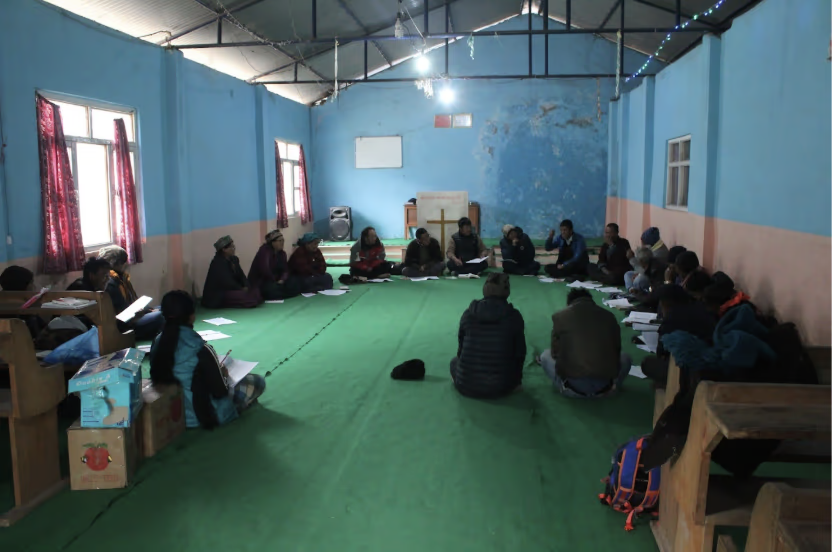
One of the strongest ethical arguments for Bible translation is that it is typically carried out by mother-tongue translators—people from the community itself. External linguists and consultants serve as advisors, not decision-makers.
This approach ensures that language, culture, and worldview are respected rather than overwritten, as seen in stories like God Calls.
Language Preservation, Not Cultural Erasure
Contrary to the idea that Bible translation destroys culture, it often helps preserve it. Many minority languages have never been written down. Translation work creates alphabets, records oral traditions, and strengthens cultural identity.
From an ethical perspective, this contributes to dignity and cultural survival—an outcome widely supported by UNESCO’s work on safeguarding linguistic and cultural heritage.
Addressing the Core Ethical Concerns
Is Bible Translation a Form of Coercion?
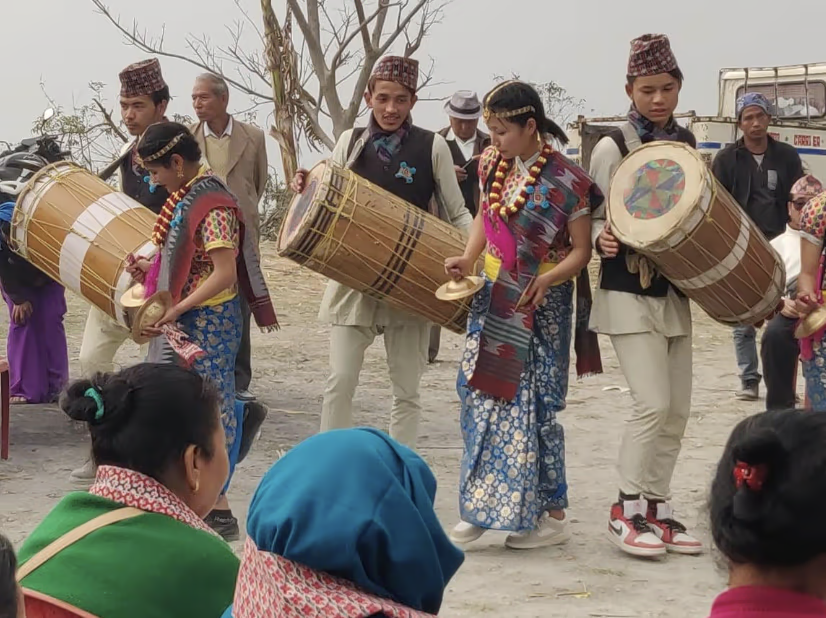
Ethical Bible translation rejects coercion entirely. Scripture is offered, not forced. Communities choose whether and how they engage with the text.
Providing access to Scripture does not remove choice—it expands it, as demonstrated in I Want Jesus to Save Me from My Lostness.
Does Translation Impose Foreign Values?
Translation is not about importing Western culture. It is about communicating biblical meaning through local expressions, metaphors, and storytelling forms. Scripture is translated into culture, not over it.
When people encounter the Word of His grace in their heart language, understanding emerges from within their own worldview, similar to what is described in Voices in the Void: Seeking Spiritual Soundbites in Asia.
Why Access to Scripture Is an Ethical Good
Withholding Access Is Also an Ethical Decision
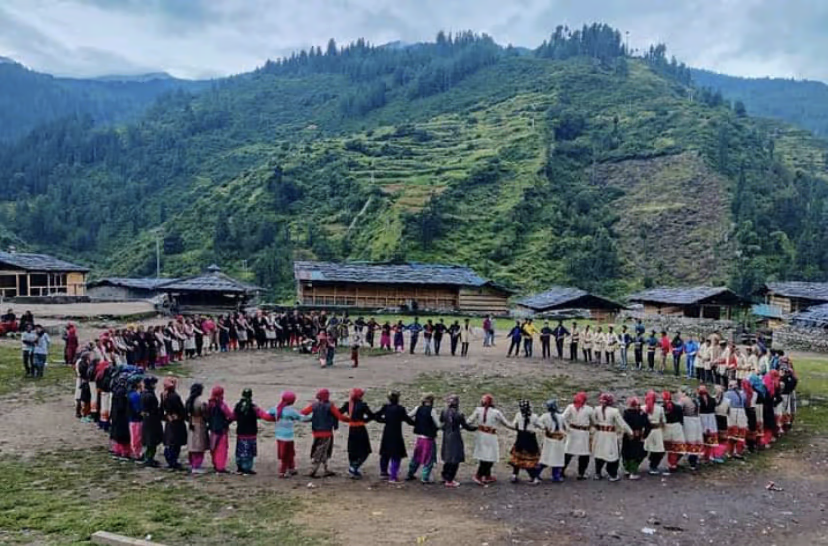
A rarely discussed aspect of the ethics of mission is this: denying people access to Scripture because of where they live or how remote they are is itself an ethical choice.
If communities want access to God’s Word, is it ethical to withhold it out of fear of criticism?
Human Dignity Includes Spiritual Agency
Ethics is not only about protection—it is also about agency. People have the right to explore faith, ask questions, and engage Scripture in a language they understand.
Bible translation respects this agency and aligns with the vision of All Access Goals: Scripture Without Borders.
The Response of Communities

When communities receive Scripture in their heart language, the response is often deeply emotional. People describe moments of recognition, clarity, and connection. Many respond with Gratitude, Wonder, and Worship—not because they were persuaded, but because they finally understand.
These responses are not manufactured; they are organic, as reflected across Impact Stories from Translation Communities.
Why This Still Matters in 2026

In 2026, ethical Bible translation is governed by principles of consent, partnership, transparency, and respect. The mission has shifted from control to collaboration.
Bible translation today exists not to dominate cultures, but to serve them—at the heart of the mission of illumiNations Asia.
Learning

So, is it ethical to translate Bibles for remote tribes? When examined through the lens of consent, cultural respect, and human dignity, the answer is yes. The ethics of mission affirms that offering Scripture—without coercion and with deep respect—is an ethical act of service. Bible translation invites people to encounter the Word of His grace in a language that speaks to their heart, opening space for gratitude, wonder, and worship—freely chosen, deeply understood, and culturally grounded.
Share:
More Posts